CompoundEU · Independent research on European equities
Who decides when a European bank changes hands
The European Central Bank has cleared the absorption of Mediobanca into Monte dei Paschi. The contested question in European banking this autumn is not whether transactions clear supervision, but where the right to decide them actually sits.
- Published
- Length
- 5 min read
On the evening of 3 September the European Central Bank authorised the merger by incorporation of Mediobanca into Banca Monte dei Paschi di Siena, together with the related corporate reorganisation and the consequent amendments to the articles of association. The shares closed the following session 0.54 per cent lower. That muted reaction is the correct one, and it is instructive. Supervisory approval has become the most predictable stage of a European bank transaction, while the stages that determine outcomes have moved elsewhere, into company law, national securities regulators and finance ministries.
Clearance is the easy part
The authorisation concerns an entity Siena already controls, holding 86.3 per cent of Mediobanca after an exchange offer of almost 14 billion euro. Frankfurt was ratifying the legal form of a group whose economic control had changed some months earlier.
Where consolidation has stalled in Europe over the past two years, it has rarely stalled at the supervisor. It has stalled at shareholder registers, at government holdings, at conduct regulators asked to rule on process, and at national instruments such as golden power that sit outside the banking union entirely. The single supervisor is genuinely single. The machinery that decides who owns what is not.
Italy is testing where the passivity rule ends
Monte dei Paschi is the target of a voluntary exchange offer announced by Intesa Sanpaolo on 8 June, worth 30.6 billion euro at announcement. Article 104 of the Italian consolidated finance act therefore applies, and the board of a target cannot on its own resolve measures capable of frustrating that offer. On 20 August the Siena board nonetheless approved two parallel exchange offers on Banco BPM and Banca Generali worth about 34 billion euro in total, taking the whole package to a single shareholder meeting on 29 October, where each resolution requires two thirds of the capital represented.
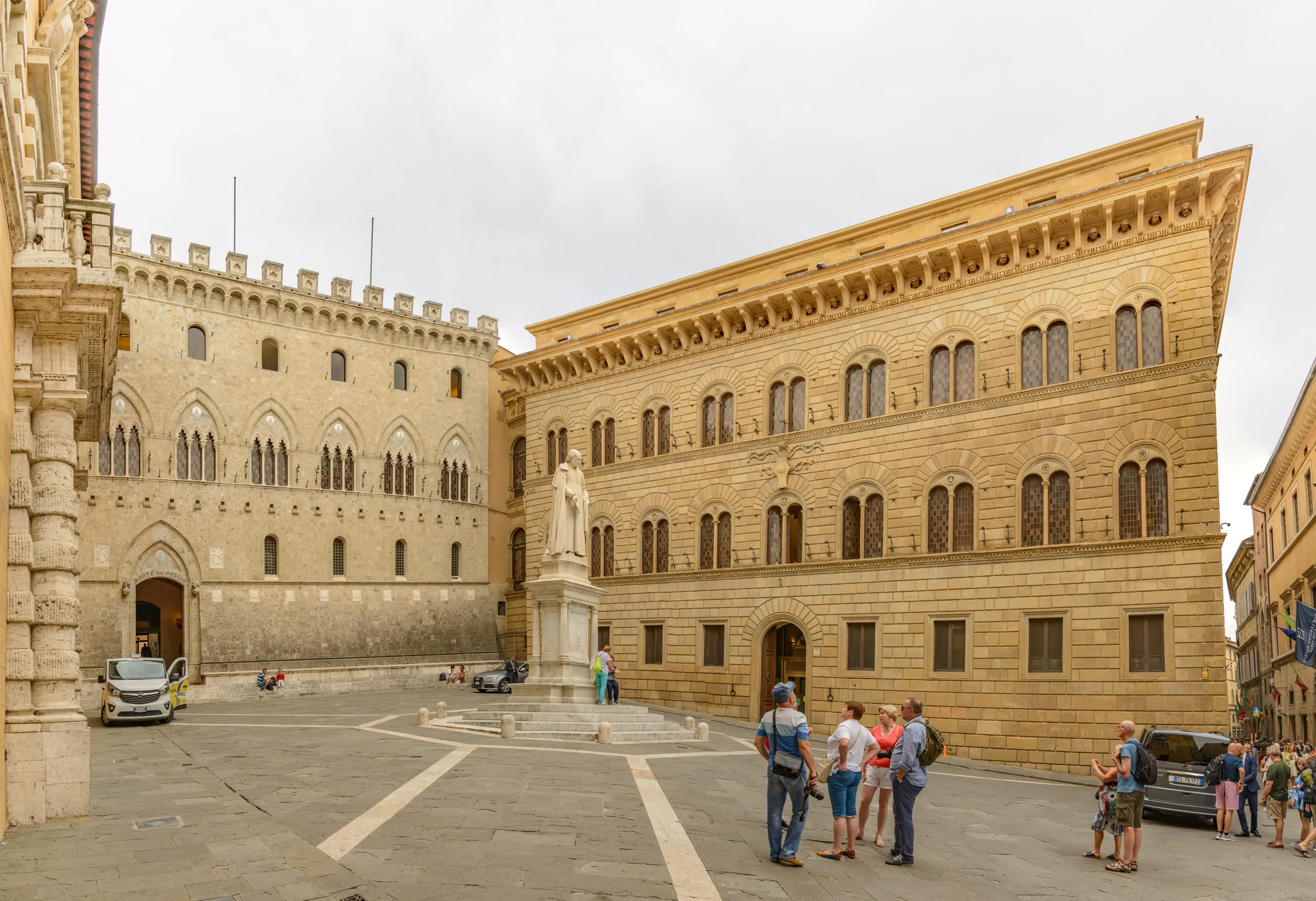
Intesa filed observations with Consob on 26 August running to roughly thirty pages, arguing in substance that shareholder authorisation should precede rather than follow the announcement of a defensive transaction. Consob has since sought clarifications. The point of principle is larger than either bank. If a target board may announce a reshaping of its own perimeter and seek ratification two months later, the passivity rule protects shareholders considerably less than its drafting suggests, and every future Italian contest will be conducted on that understanding.
Germany is testing the state as a shareholder
Frankfurt offers the mirror image. UniCredit launched a takeover offer for Commerzbank in March worth about 35 billion euro and now holds a calculated stake of 49.65 per cent, a figure that rose without further purchases when Commerzbank cancelled shares from its own buyback programme. The federal government holds roughly 12.6 per cent. No securities law obstacle stands in the way of a bidder that already determines the outcome of shareholder resolutions. What stands in the way is a political shareholder and the constituencies attached to it, which is why the decisive appointment is a meeting between the German finance minister and the acquirer scheduled in Berlin for 14 September rather than any regulatory deadline.
The two cases resolve differently but rhyme. In Italy the contest turns on how a conduct regulator reads a statute. In Germany it turns on what a government decides to do with a crisis era legacy holding.
Consolidation as an answer to a profitability gap
The commercial argument behind all of this does not depend on any individual transaction. Analysis published by EY at the start of September found that the ten largest European banks lifted first half profits by 21 per cent to 58.7 billion euro, while their American peers raised earnings by 42 per cent to a record 110.6 billion euro. Scale, funding costs and the fee businesses attached to capital markets explain much of that gap, and consolidation is the instrument most readily available to management teams that wish to close it.
That argument, however, is being made through defensive as much as offensive transactions, and the distinction matters when reading the disclosure. The Siena offer for Banco BPM carries no premium to the market price, and the package presented to shareholders is accompanied by a proposed distribution of 4 billion euro conditional on at least one of the offers becoming effective. A capital return contingent on the approval of an acquisition is a price paid for consent rather than a judgement about the use of capital.
| Date | Event |
|---|---|
| 10 September | Intesa Sanpaolo extraordinary meeting on the capital increase |
| 14 September | German finance minister meets UniCredit in Berlin |
| 29 October | MPS shareholders vote on the offers, distribution and merger |
| December | MPS offer period expected to open, alongside the Intesa offer |
| February 2027 | Completion of the MPS offers expected |
What the autumn will settle
Three questions will have answers before the year ends. Whether a conduct regulator can constrain the timing of a defence, which sets the terms of Italian contests for a decade. Whether a member state will sell a legacy banking stake to a foreign acquirer that already holds effective control, which sets the credibility of cross border consolidation elsewhere. And whether shareholders presented with a conditional distribution treat it as compensation or as an inducement. None of these is a supervisory question, which is the point.
compoundeu.com/articles/who-decides-when-a-european-bank-changes-hands